
Traditional Publishing Has Lost Its Soul
I realize now how lucky I was, growing up in the eighties and nineties, a period when human artists, musicians, actors, photographers, and writers, and the endlessly eclectic bodies of creative work they produced, were still treated like the remarkable sources of original thought and talent they were. Independent record labels, independent film houses, independent publishers actively sought the new, the undiscovered, the unusual, the quirky—the movie with cinematography unlike any we had yet seen, the song with an arrangement we had never heard, the novel with a structure that broke all the rules.
My brother was a drummer in a punk band during this time, and the group benefited from industry culture of seeking and celebrating emerging talent and different voices. They were signed to an independent label, put out multiple albums, and toured for several years. Did they win a Grammy or play the Super Bowl? No, but they developed a devoted fanbase and eked out a working musician’s living with the support they received from the label that saw value in adding talent to its catalog—maybe not significant monetary value, but value nonetheless.
I spent two decades on the other side of the discovery-and-support relationship, as managing editor at an internationally known and highly respected independent publisher. My colleagues and I were driven by a desire, above all else, to produce something of high quality: beautiful to look at, pleasant to read, carefully edited, sturdy to hold, carry, and study. And after that, to find what’s next. What hasn’t been published yet? What’s different than what’s already out there? What subject hasn’t been studied? Which author is trying to say something new or in an excitingly different way? Our independent model allowed for this, as we worked with small print runs and the need to make a markup that kept the lights on, but without pressure from investors demanding more. As so happens when you take chances, the occasional breakout “star” went big and increased profits, and we celebrated those books, of course, and always hoped for another. But that didn’t stop us from our fundamental drive to discover new authors, support quality authors, and help launch those bringing different kinds of experiences and viewpoints to the world.
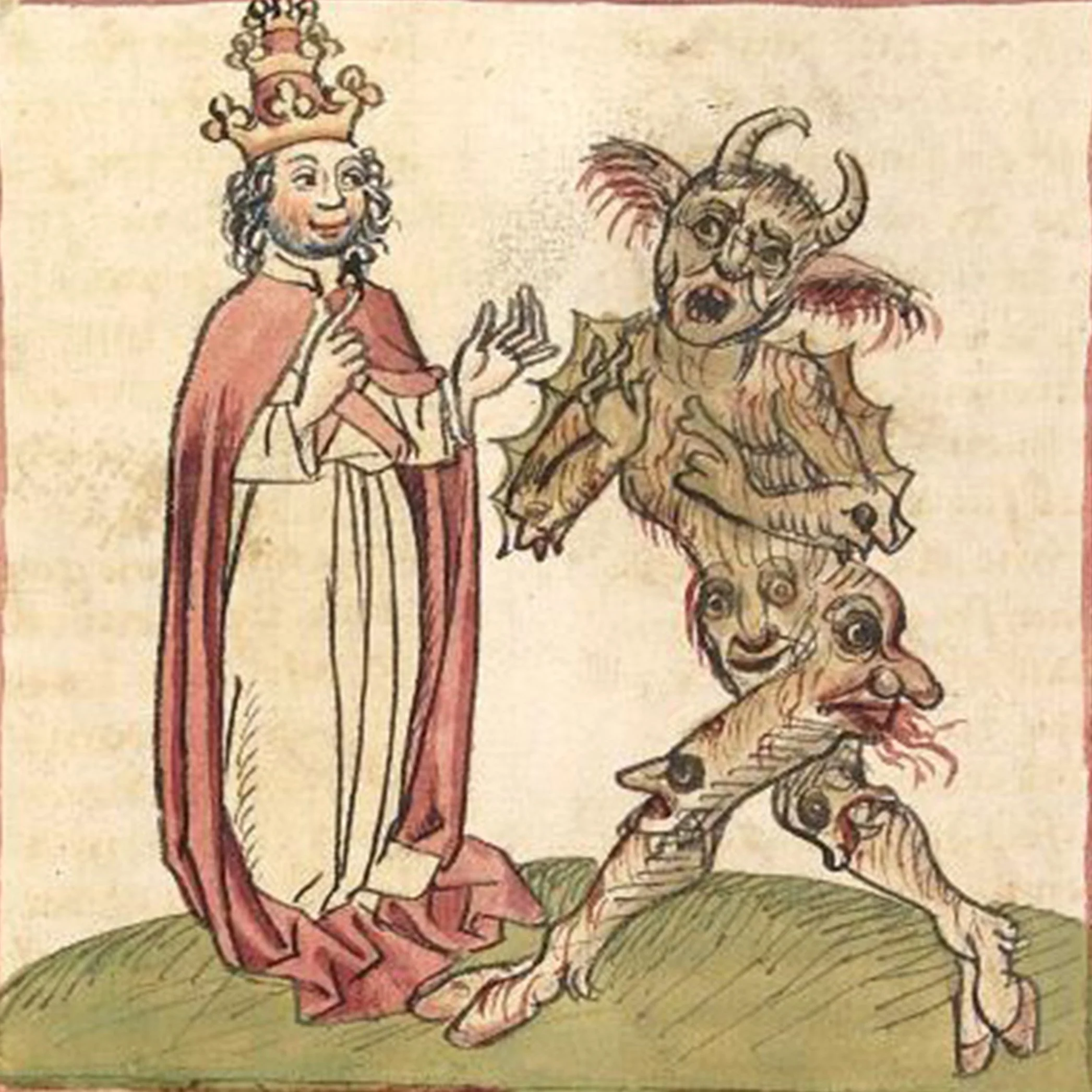
Faustian Bargain by Unknown author - Chronicon pontificum et imperatorum, Public Domain, https://commons.wikimedia.org/w/index.php?curid=696683
All of us are suffering the results of the delights of this model being disregarded, while instead data is scoured for indicators of what already sells and how can we make more of it. We’re seeing it in the film industry, where indie films struggle for backing and recognition while we’re fed Marvel movie after Marvel movie after Marvel movie. We’re hearing it on Spotify, which curates what we listen to so every female pop singer has the same voice and every country song has the same lyrics. And we’re reading it in books, where authors writing about a “trending” topic are perceived to be more “publishable” than those breaking new ground, and artificial intelligence can help mass generate thousands of new romantasy titles each week to feed a perceived market.
There has always been a “commercial” side to the arts, and there have always been music and film producers, and publishers, who dedicated their efforts and their companies to achieving “commercial success.” But my heart breaks repeatedly as I hear from friends and colleagues in different parts of the traditional publishing world that algorithms and data points now bear more weight in decisions about a book being published than the quality of the writing, the expertise of the author, or the importance of the subject.
Traditional publishing made a deal with the devil as it gave up more and more control to Amazon over the last 30 years, always assuming expanding reach and broadening distribution made up for the behemoth’s increasingly bloodthirsty demands for discounts and terms skewed in its favor to an unfathomable degree. It appears now traditional publishing may have lost its soul.
—Rebecca